How to Choose the Right Oil Pressure Transmitter?
Inline oil pressure transmitters are essential instruments in oil pressure measuring within a pipeline or system, offering real-time pressure monitoring and control. Compared to standard pressure transmitters, inline models are engineered for seamless integration into the flow path via threaded or flanged connections, being ideal for oil & gas, automotive, hydraulic systems and industrial machinery.
Figure out application-specific requirements before choose inline oil pressure transmitters. Measured pressure readings are converted into electrical signals and delivered to the intelligent control system for further analysis and regulation.
Essential Factors Requiring Careful Considerations
Pressure range, flow and viscosity, various sensing technologies, compatible material and output signal should be taken into account for accurate and reliable monitoring. At the same time, environmental and safety requirements should be valued for compliance in target areas.
Value Application Requirements
The min and max oil pressure in piping determine that the range of pressure transmitters covers these values to prevent potential damage or inaccurate readings.
Types of pressure measurement are categorized into gauge pressure, absolute pressure and differential pressure, being related to atmospheric pressure, vacuum or difference between two points in corresponding.
Flush diaphragms are needed in viscous or turbulent flows for fear of clogging or measurement errors.
Sensing Technologies of Pressure Transmitters
Capacitive transmitters are suitable for general-purpose applications, in which cost-effective and moderate accuracy pressure transmitter solutions are required;
Diffused silicon transmitters are applicable to hydraulic or oil and gas systems for high accuracy and stability in wide pressure ranges;
Piezoresistive transmitters outstand in providing excellent accuracy and are common in industrial applications like pipeline monitoring or automotive systems;
Compatible Materials
Wetted parts of pressure transmitters like diaphragm or housing should be durable enough in oil and gas processing. There are several materials available for different media: stainless steel, titanium alloy, tantalum or ceramic coatings.
In general, stainless steel (SS316L) is a cost-effective solution for most oils and mild corrosives in inline transmitters; Titanium alloy is suitable for highly corrosive oils or harsh environments at a costly expense. Tantalum is ideal for extreme corrosives but expensive and not compatible with strong alkalis.
Talk to an Expert

Gauge and Absolute Pressure Transmitter

3051 Pressure Transmitter

In-Line Pressure Transmitter
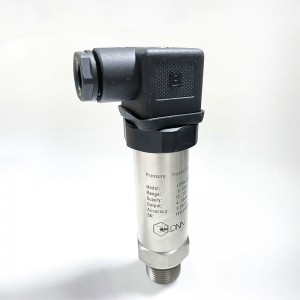
Flat-diaphragm Pressure Transmitter
Choose the Right Output Signal
The transmitter’s output must integrate with your control or monitoring system:
- 4-20 mA: Standard for industrial applications, reliable for long-distance signal transmission.
- 0-10 V: Suitable for voltage-based systems, often used in automotive or smaller setups.
- Digital Outputs (e.g., HART, Modbus): Preferred for smart systems requiring diagnostics or remote configuration.
Confirm the output signal matches your system’s requirements to ensure seamless integration.
Evaluate Environmental and Safety Requirements
Inline transmitters are often exposed to challenging conditions:
- Hazardous Locations: In oil and gas applications (e.g., pipelines, refineries), select explosion-proof or intrinsically safe transmitters certified by standards like ATEX, FM, or CSA to prevent ignition risks.
- Ingress Protection (IP/NEMA Ratings): For outdoor or wet environments, choose a transmitter with a high IP rating (e.g., IP67 or IP68) to protect against dust, water, or oil ingress.
- Temperature Range: Ensure the transmitter operates within your system’s temperature limits. Inline transmitters in high-temperature applications (e.g., engine oil monitoring) need robust thermal tolerance.
Select the Correct Process Connection
Inline transmitters must connect securely to the pipeline:
- Threaded Connections: Common options like 1/4” NPT, G1/2, or M20 threads are suitable for most inline applications. Ensure proper sealing (e.g., O-rings or PTFE tape) to prevent leaks.
- Flanged Connections: Used in high-pressure or large-diameter pipelines for low pressure drops and secure installation.
- Pipe Size Compatibility: Verify the transmitter’s connection matches your pipe diameter to avoid flow restrictions or installation issues.
Choose a connection type that ensures a leak-proof, stable installation without disrupting flow.
Balance Cost and Performance
While high-end materials like tantalum or advanced technologies improve durability and accuracy, they may not be necessary for less demanding applications. SS316L-based transmitters with capacitive or piezoresistive technology often offer a cost-effective balance. Consider lifetime costs, including maintenance, calibration, and potential downtime, when evaluating options. A reliable transmitter reduces long-term expenses.